How to Build a Credit Score From Zero in 12 Months
- PehchanPe Team
- April 20, 2026
- 04 Mins read
- Credit Score , Tips
If you have never taken a loan or used a credit card, you have no credit score. This is sometimes called being “NTC” (New to Credit). It is not the same as having a bad credit score. You are not penalised for having no history. But you cannot borrow at good rates until a lender can see evidence that you repay reliably.
Building a score from zero takes about 12 months if you follow a structured plan. Here is exactly what to do.
Why 12 months?
Credit bureaus like CIBIL require at least 6 months of credit history before they generate a score at all. During the first 6 months, your score may show as “NH” (No Hit) or “-1” even if you are repaying perfectly.
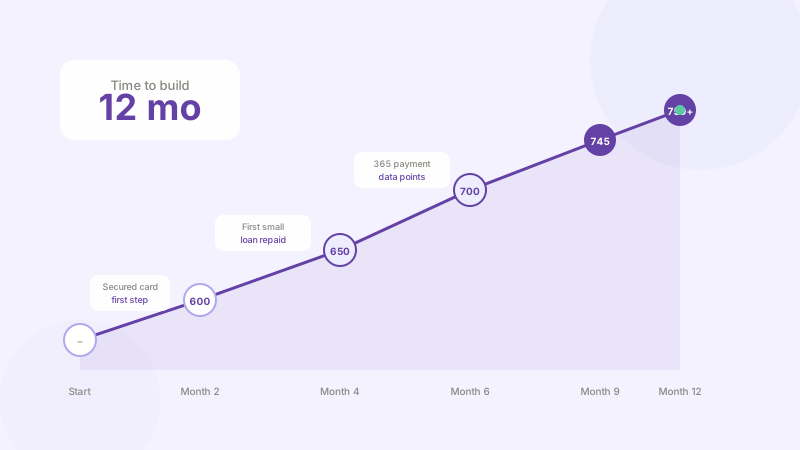
After 6 months of clean repayment, you will typically see a score in the 600 to 650 range. By month 12, consistent repayers with no missed payments commonly reach 700 to 750.
Months 1 to 3: Get your first credit product
Your goal in the first three months is simply to obtain your first formal credit product and begin repaying it without missing a single payment.
Option A: A small business microfinance loan (best for most PehchanPe users)
Microfinance institutions (MFIs) and some NBFCs offer loans of ₹10,000 to ₹50,000 to NTC borrowers with no credit score required. Interest rates are higher than bank loans (typically 22% to 26% per annum), but that is the cost of starting. The point is not to get the cheapest money; the point is to start building a record.
With a ₹25,000 loan at daily repayments of around ₹80 to ₹90 per day, you begin creating credit bureau data from the first payment.
Option B: A secured credit card
Several banks and NBFCs offer credit cards against a fixed deposit. You deposit ₹10,000 to ₹20,000, receive a card with a similar credit limit, and use it for small monthly expenses. Pay the full balance before the due date every month.
This is one of the fastest ways to build a credit history because credit card issuers report to bureaus every month.
Months 3 to 6: Manage your utilisation
By month 3, your bureau file should show your first product. Focus on two things:
-
Never miss a payment. Set up auto-debit or a phone reminder. Even one missed payment at this stage can push your emerging score below 600 once the bureau starts generating a number.
-
Keep your credit utilisation low. If you have a ₹20,000 credit card limit, do not carry a balance above ₹8,000 to ₹10,000 (40 to 50%). Bureaus reward borrowers who use credit without maxing it out.
Avoid applying for additional credit products during this period. Each application triggers a “hard enquiry” that temporarily lowers your score.
Months 6 to 9: Check your score and your report
By month 6, pull your credit report from CIBIL or Experian. You can do this for free once a year, or for a small fee at any time.
Check for:
- Errors: A wrong name, PAN, or date of birth can prevent bureau updates from reaching your file
- Missing accounts: If your lender is not reporting to the bureau, contact them and ask them to enrol (all RBI-regulated lenders are required to report, but some MFIs have inconsistent practices)
- “Written off” or “settled” accounts: These should not appear if you have no prior credit history, but mistakes happen. Raise a dispute with the bureau if you see one
Once your score appears and is above 600, you are ready to explore a second, slightly larger credit product.
Months 9 to 12: Add a second product
A second active credit product increases your score for two reasons: it shows lenders you can manage multiple obligations, and it typically increases your total credit limit (lowering your overall utilisation ratio).
Ideal choices at this stage:
- A step-up loan of ₹50,000 to ₹2 lakh from the same or a different lender
- A MUDRA Kishore loan if you qualify
- A business current account overdraft facility
Apply for one product, not multiple at once. Each approved account adds data. Each rejected application adds an enquiry. Be selective.
What to expect at month 12
A borrower who follows this plan faithfully can expect a score of 700 to 750 by month 12. Some achieve higher, depending on the mix of products and the total repayment history generated.
At 700+, you gain access to the mainstream NBFC and bank loan market, significantly lower interest rates, and products like the SIDBI UAP Loan and MUDRA Tarun.
The shortcut that actually works
The fastest path to a score is the simplest one: take one small daily-repayment loan, repay it every single day, and do not apply for anything else for 12 months.
A loan with 365 daily repayments generates 365 data points for the bureau every year. A monthly EMI product generates only 12. Daily repayment products build credit history faster than anything else available in the Indian market today.
This is one of the reasons PehchanPe focuses on daily-repayment structures for first-time borrowers on Pulse.
Ready to start? Check your PehchanPe Pulse profile to see which products are available to you today, including options designed specifically for NTC borrowers.