What Your Credit Score Really Means
- Kavitha Palancha
- November 10, 2025
- 02 Mins read
- Credit Score
Your credit score is one of the first things a lender looks at when you apply for a business loan. Yet for most small business owners and first-time borrowers, it remains a mystery: a three-digit number that opens or closes doors without explanation.
This guide breaks it down plainly.
What is a credit score?
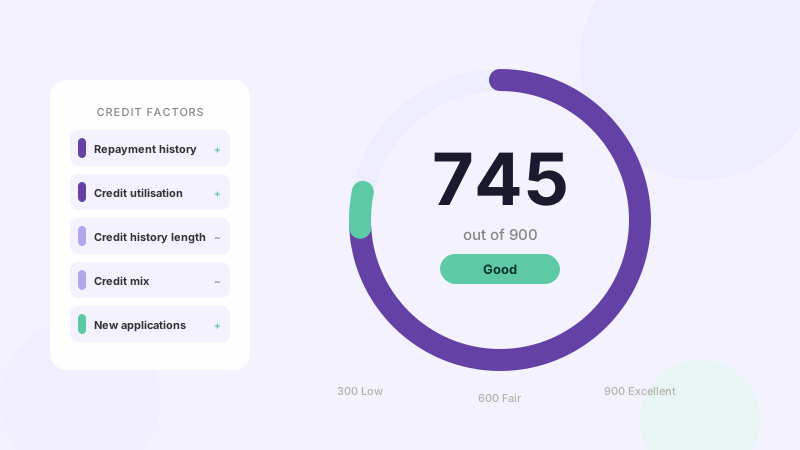
In India, the most widely used credit score is the CIBIL score, maintained by TransUnion CIBIL. It ranges from 300 to 900. The higher your score, the more confident a lender is that you will repay your loan on time.
A score above 750 is considered excellent and qualifies you for most loan products. Scores between 700 and 749 are good and will be accepted by most lenders. Between 650 and 699 is fair and may attract tighter terms. Below 650 needs improvement, though options still exist, particularly through lenders who specialise in first-time borrowers.
What affects your score?
Five factors shape your credit score:
Repayment history is the single biggest factor. Paying on time, every time, adds to your score consistently. A single missed payment, on the other hand, can take months to recover from.
Credit utilisation refers to how much of your available credit limit you are using. Using less than 30% signals responsible borrowing.
Length of credit history rewards older accounts in good standing. The longer your track record, the better.
Credit mix means having both secured loans (such as a home or vehicle loan) and unsecured credit. It shows lenders you can manage different types of borrowing.
New credit applications matter because applying for too many loans in a short period can nudge your score down, as it signals financial stress.
What if you have no credit history?
Many first-time borrowers, including micro-entrepreneurs and those new to formal banking, have never taken a loan. That means no credit history and no CIBIL score. This is called being “new to credit.”
It does not mean you are ineligible. Lenders who work with PehchanPe, including SIDBI under the UAP programme, specifically cater to new-to-credit borrowers. They use alternative signals, such as UPI transaction history and cash flow patterns, to assess your repayment ability.
How to check your score for free
You are entitled to one free CIBIL report per year at cibil.com. Several banks and fintech apps also offer free score checks that do not affect your credit.
How PehchanPe Pulse helps
PehchanPe Pulse is a free financial health report that shows you where you stand before you apply anywhere. It presents your credit readiness in clear terms and connects you to lenders whose products match your profile. No paperwork, no branch visit.
If your score is lower than expected, Pulse highlights the specific factors you can work on. Small, consistent improvements over three to six months can make a meaningful difference to your eligibility.
The first step towards a better loan is understanding where you stand today.